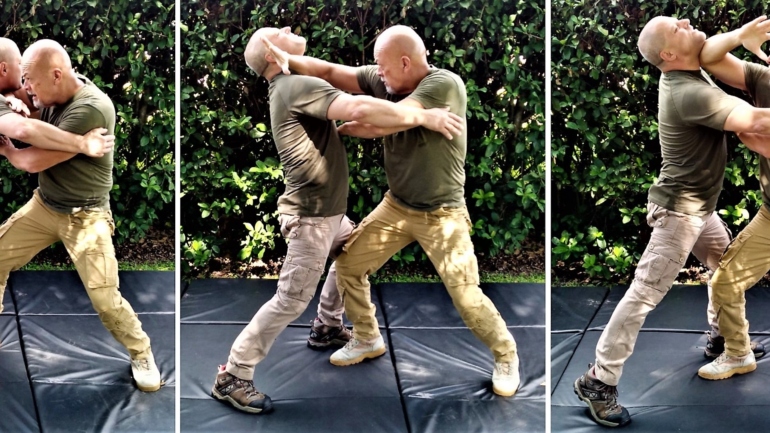
1.) From a ready position, you see the aggressor start to throw a rear hand punch. Push off the left foot and step forward with your right foot at a slight angle along the right side of the…
1.) From a ready position, you see the aggressor start to throw a rear hand punch. Push off the left foot and step forward with your right foot at a slight angle along the right side of the…
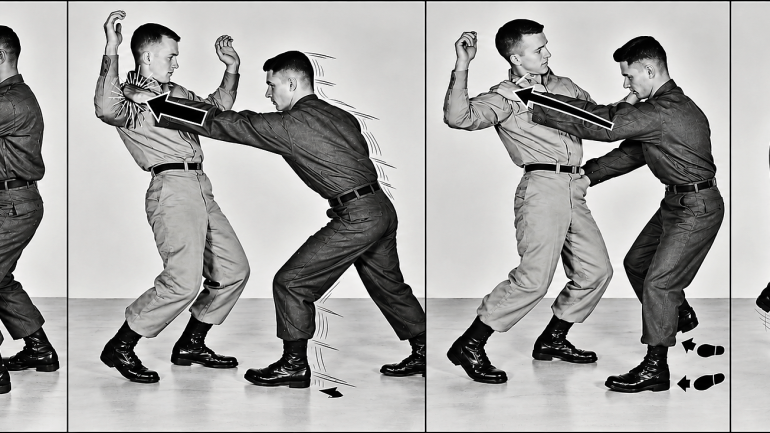
One of the most significant elements of the U.S. Army’s mid-century hand-to-hand combat doctrine was not simply the selection of Judo throws it taught, but how the soldier entered in to those throws. In the 1954 FM 21-150,…
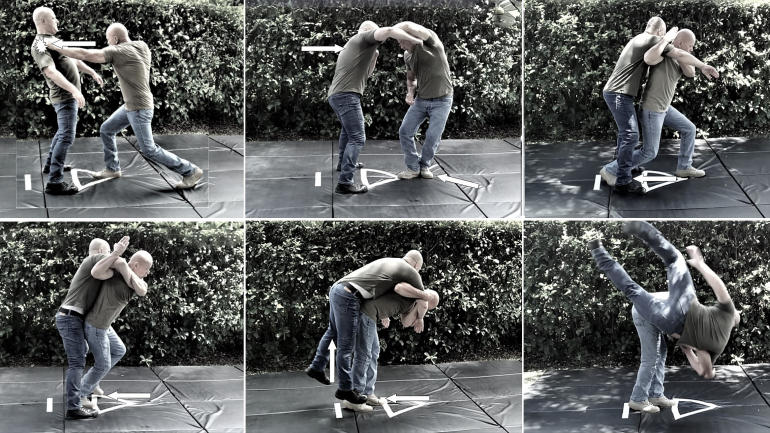
One of the most persistent criticisms leveled against Judo is surprisingly simple: “Judo won’t work if the other guy isn’t wearing a gi or a jacket.” Historically, however, the American military spent decades demonstrating otherwise. Long before modern…
Combat Judo and America’s WWII Special Reconnaissance Warriors By Barron Shepherd The relationship between the Alamo Scouts and Judo is rooted in the grueling, hand-to-hand combat training required for World War II elite forces.The Alamo Scouts (U.S. Sixth…
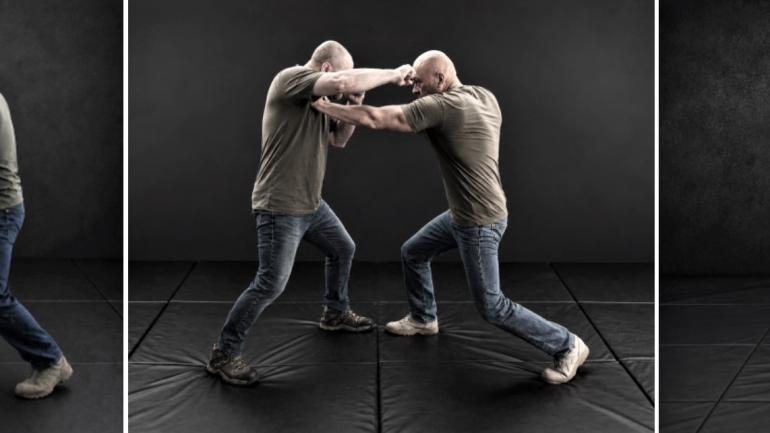
Understanding the Cross Hock as a Distinct Combative Takedown The Cross Hock Takedown occupies an interesting position in the history of American military hand-to-hand combat. At first glance, the technique bears a superficial resemblance to Judo’s Osoto Gari,…
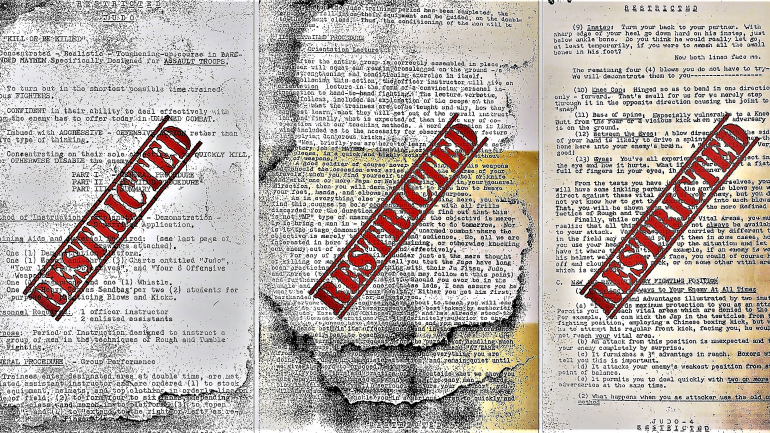
Understanding the Architecture of the U.S. Army’s WWII Close-Combat Course At first glance, the World War II-era Restricted Judo course can look like a collection of harsh hand-to-hand combat techniques assembled for soldiers preparing for war. There are…


During WWII, military combatives programs prioritized techniques that were practical, easy to learn, and effective under stress. The reverse hip throw was one of four core throws taught across U.S. military training manuals because of its proven success…

Barron Shepherd’s Combat Judo differs from traditional Judo in several key ways, largely in its focus and application. While both are rooted in the same Japanese martial arts principles, Combat Judo is specifically tailored for real-world combat situations.…

Many people will dismiss the usefulness of Judo as a fighting method because it is practiced in a Gi. It’s common to see some in the martial arts community diminish judo as a viable method of self defense.…