Combat Judo and America’s WWII Special Reconnaissance Warriors
By Barron Shepherd
The relationship between the Alamo Scouts and Judo is rooted in the grueling, hand-to-hand combat training required for World War II elite forces.The Alamo Scouts (U.S. Sixth Army Special Reconnaissance Unit) were an elite deep-reconnaissance force operating behind enemy lines in the Pacific Theater. Because their missions demanded absolute stealth, silent killing, and survival in extreme close-quarters scenarios, “Combat Judo” became a foundational pillar of their daily physical regimen
By the beginning of World War II, Judo and Jiu-Jitsu-derived methods of close combat had spread throughout various branches and training programs of the United States military. These methods were adapted from their sporting and traditional origins to meet military requirements, becoming part of a broader American approach to hand-to-hand combat that was frequently described during and after the period as Combat Judo.
Combat Judo was not intended to turn soldiers into tournament Judoka. Nor was hand-to-hand combat expected to replace the rifle, pistol, knife, or other weapons carried by the fighting man. Its purpose was far more specific: to provide soldiers with a practical method of fighting when circumstances collapsed into extreme close quarters.
Few American units were better suited to such training than the legendary Alamo Scouts.
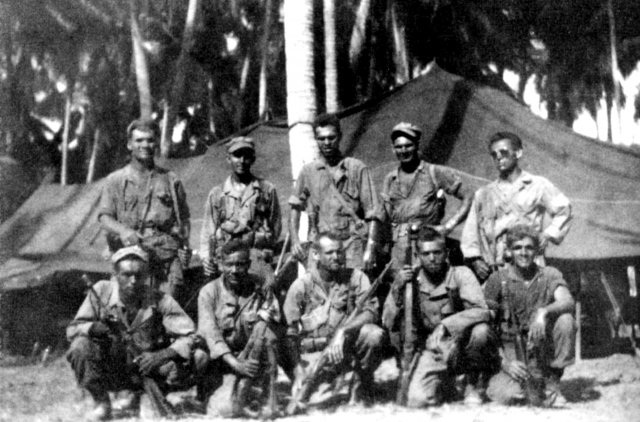
Formed under Lieutenant General Walter Krueger’s U.S. Sixth Army in the Southwest Pacific, the Alamo Scouts were a specialized reconnaissance and raider organization. Operating in very small teams, Scouts penetrated deep behind Japanese lines to gather intelligence, conduct reconnaissance, and perform other highly sensitive missions.
Their success depended upon qualities very different from those required during a conventional infantry assault. They needed stealth, speed, surprise, adaptability, discipline, and the ability to solve problems without unnecessarily revealing their presence. Within that tactical environment, Judo made tremendous sense.
A Fighting Method for Men Who Were Supposed to Avoid Fighting
At first glance, there appears to be a contradiction in teaching extensive close combat to reconnaissance troops whose primary objective was to avoid detection. In reality, the opposite is true. The fact that the Scouts needed to avoid conventional combat is one of the strongest reasons for teaching them effective close combat.
A conventional infantryman discovering an enemy position might have considerable firepower available to him. A small reconnaissance patrol several miles behind enemy lines faced an entirely different problem. Firing a weapon could compromise the patrol.
A single gunshot might alert nearby enemy personnel, disclose the presence of American troops, initiate a search, and potentially transform an intelligence-gathering mission into a desperate attempt to escape. The Scout therefore needed options. Combat Judo did not replace his firearm. Instead, it provided another layer within his fighting capabilities, a method of functioning when the distance between two men had collapsed to physical contact and the immediate use of a firearm was impossible, undesirable, or tactically disadvantageous. The objective was not to engage in a prolonged fistfight. The objective was to resolve the confrontation quickly enough to continue the mission.
The Tactical Importance of Extreme Close Quarters
The jungle environment of the Southwest Pacific made this capability particularly relevant. Heavy vegetation, darkness, narrow trails, buildings, observation positions, riverbanks, boats, and other confined environments could dramatically reduce the distance at which two opposing soldiers encountered one another.
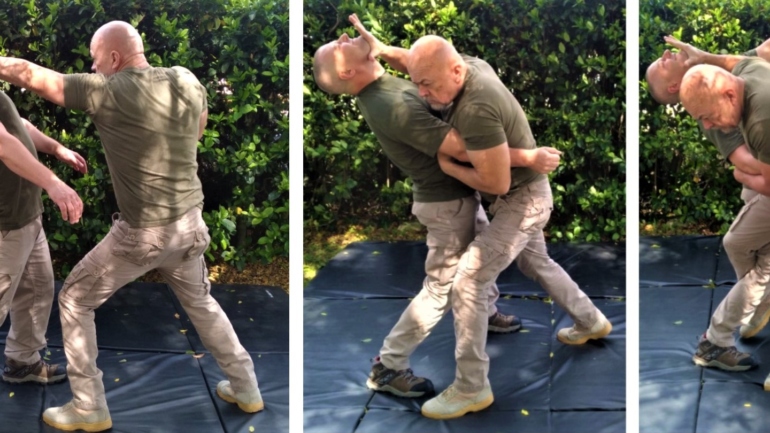
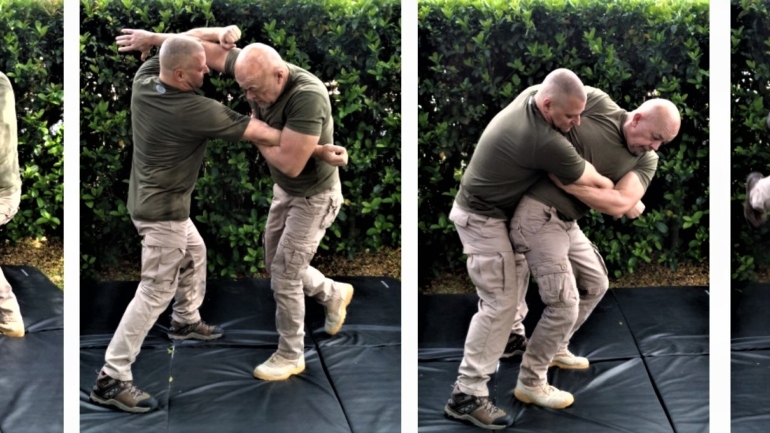
At several yards, the problem might be solved with a firearm. At several inches, it becomes a completely different problem. An opponent might grab clothing, equipment, an arm, a weapon, or the soldier himself. At that point, balance, posture, leverage, body positioning, and control become critically important. These are precisely the areas in which Judo excels.
The underlying mechanical progression can be expressed simply:
DISRUPT → OFF-BALANCE → CONTROL → THROW/TAKEDOWN → FOLLOW-UP OR DISENGAGE
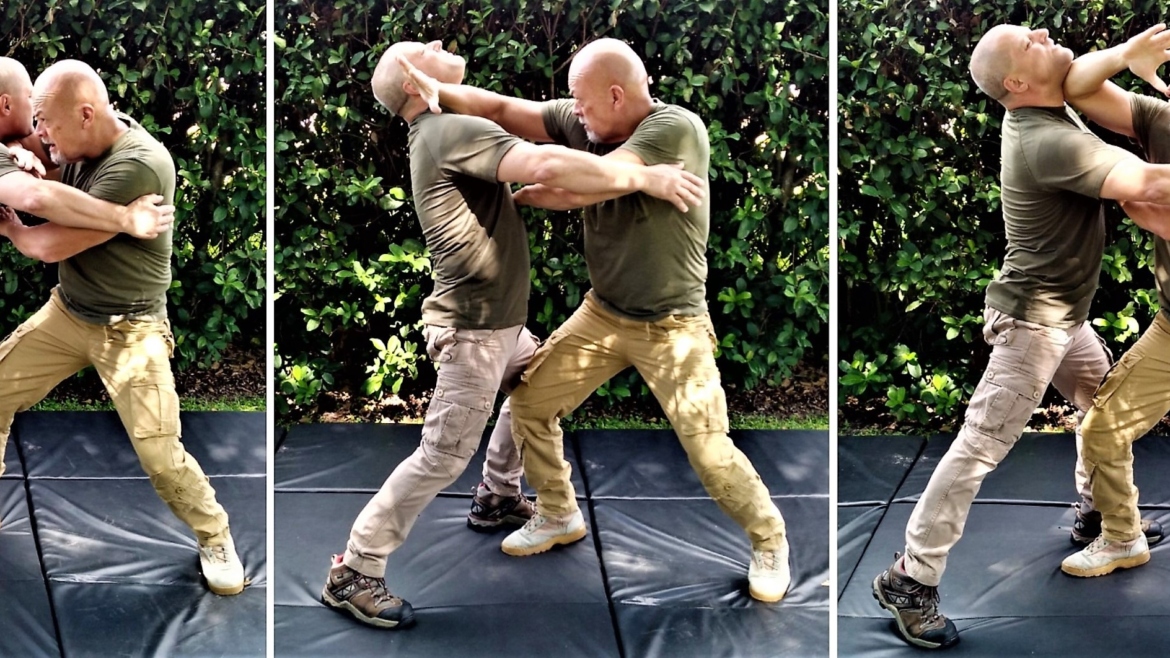
Rather than exchanging blows with an opponent and allowing a confrontation to develop into a prolonged struggle, Judo offered the possibility of immediately attacking the opponent’s physical structure. Destroying balance interferes with practically everything an opponent wants to accomplish.
Once his center of mass is driven beyond his stable base, he must attempt to recover his balance. His feet must reposition. His posture changes. His ability to generate effective force decreases, and his ability to manipulate a weapon can potentially be compromised.
The Scout could then exploit that disruption through a throw, trip, takedown, control, or other close-quarter action. In practical military application, kuzushi becomes more than a sporting principle. It becomes a method of disrupting an enemy’s ability to fight.
Silence Could Mean Survival
There was another obvious advantage. Judo did not inherently depend upon firing a weapon. This does not mean that every Alamo Scout was routinely creeping through the jungle performing silent Judo takedowns on Japanese sentries. Such claims should only be made where specific historical evidence supports them. The tactical principle, however, is undeniable.
A reconnaissance unit whose survival depended upon remaining undetected benefited from possessing methods of physical control that did not automatically announce its position through gunfire. That makes Combat Judo especially compatible with reconnaissance doctrine.
The Scout’s mission might be summarized as:
INFILTRATE → OBSERVE → COLLECT → REMAIN UNDETECTED → EXTRACT
If physical confrontation became unavoidable:
SURPRISE → DISRUPT → CONTROL → TAKEDOWN → NEUTRALIZE OR DISENGAGE → CONTINUE THE MISSION
The close-combat system therefore existed in support of the reconnaissance mission rather than independently from it.
The Alamo Scouts Had Dedicated Judo Instructors
Perhaps the most compelling evidence for the importance placed upon Judo is found in the personnel records preserved by the Alamo Scouts Historical Foundation. Among the men listed on the organization’s roster are two individuals whose assignments immediately stand out:
Moyer, Carl F. / 2LT / 1st / GRADUATE / Retained as Judo Instructor and: Mrozinski, Stephen J. / 1SG / Staff-Judo Instructor
These descriptions are historically significant. Second Lieutenant Carl F. Moyer was not merely identified as someone possessing previous Judo experience. He is specifically listed as a graduate of the first class who was “Retained as Judo Instructor.” First Sergeant Stephen J. Mrozinski is specifically identified as “Staff-Judo Instructor.”
The importance of those designations should not be overlooked. They indicate that Judo was sufficiently valuable within the Alamo Scouts training environment that personnel were specifically assigned or retained to teach it. This moves the subject beyond speculation about whether individual Scouts happened to know Judo. Judo instruction had a recognized place within the training structure.
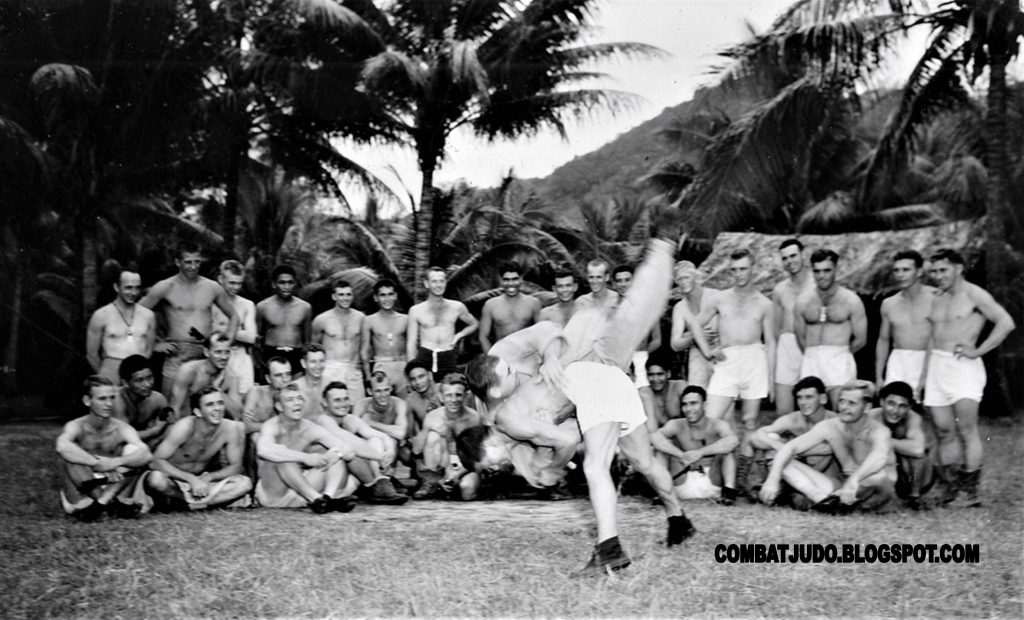
Historical material such as picture above, obtained from a private collection, also identifies Mrozinski demonstrating throwing techniques to Alamo Scouts trainees, providing additional evidence of the practical nature of Judo instruction.
Judo Was Only One Part of the Weapon System
It would nevertheless be a mistake to separate Combat Judo from the rest of the Scout’s training. The individual Scout was the weapon system. Navigation was part of that system. Weapons proficiency was part of it. Intelligence gathering was part of it. Fieldcraft, communications, physical conditioning, observation, stealth, and reconnaissance were parts of it.
And close combat was another component.
The purpose was not to produce the finest competitive Judoka. It was to create a soldier capable of functioning independently in an extraordinarily dangerous environment. Combat Judo therefore had to complement the Scout’s other capabilities rather than compete with them.
The Scout did not stop being a reconnaissance soldier when an enemy grabbed him. He had simply encountered a new tactical problem. His Judo training gave him another method for solving it.
Economy of Movement and the Reconnaissance Mindset
There is also a philosophical similarity between good reconnaissance and effective Judo. Neither rewards unnecessary action. A reconnaissance patrol observes, evaluates, adapts, and acts only when necessary. Every unnecessary movement can create additional risk. Judo operates according to a comparable mechanical economy. The practitioner does not simply attempt to overpower resistance through muscular strength. He uses positioning, timing, leverage, movement, balance, and the opponent’s reactions to create opportunities.
The Scout likewise could not simply overpower every tactical problem. Operating deep inside enemy-controlled territory meant that he was frequently outnumbered by forces he could never hope to defeat through direct confrontation.
He survived through intelligence. He survived through positioning. He survived through timing. He survived through surprise. And he survived by knowing when not to fight.
Combat Judo reflected many of those same principles at the individual level.
Why Combat Judo Fit the Alamo Scouts
When viewed from this perspective, the relationship between Judo and the Alamo Scouts becomes much clearer. Combat Judo was appropriate because it addressed several problems inherent in special reconnaissance:
It functioned at extreme close range. It emphasized balance, leverage, and positioning rather than strength alone. It provided methods of controlling an opponent from physical contact. It could transition rapidly from standing contact into a throw or takedown. It offered close-quarter options that did not inherently require gunfire. It complemented rather than replaced the Scout’s weapons.
Most importantly, it was consistent with the operational philosophy of the Scouts themselves. These men were not supposed to fight unnecessary battles behind enemy lines. They were supposed to accomplish the mission and return with the intelligence. That distinction explains why close-combat proficiency was valuable.
The Paradox of the Alamo Scout
There is an apparent paradox at the center of the Alamo Scouts’ use of Combat Judo: Some of the men who had the greatest need to avoid fighting also needed to be exceptionally capable of fighting when avoidance was no longer possible.
That is the essence of specialized reconnaissance. A Scout could spend days attempting to prevent the enemy from ever knowing he existed. But if suddenly confronted at arm’s length, the situation could change in an instant. At that moment there might be no opportunity for elaborate tactics.
There might only be contact. Balance. Position. Leverage. Violence. And seconds in which to solve the problem. That is the environment in which the practical principles of military Judo become particularly relevant. The documented presence of 2LT Carl F. Moyer as a retained Judo instructor and 1SG Stephen J. Mrozinski as Staff-Judo Instructor therefore tells us something important about the Alamo Scouts training philosophy.
Judo was not their primary weapon. The Scout himself was the weapon. Combat Judo was one component of the collection of skills that allowed that weapon to continue functioning when a mission suddenly moved from reconnaissance distance to arm’s length. For men operating in tiny teams, deep behind enemy lines, where discovery could mean encirclement or death, that was precisely the kind of capability worth possessing.
For more information on Combat Judo and related subjects.
 THREE COMBAT JUDO EBOOKS — $12.99 EACH
From the battlefields of WWII to modern combative application, explore the history, biomechanics, tactics, and techniques of Combat Judo through three books by Barron Shepherd.
🥋 COMBAT JUDO: HISTORY AND TECHNIQUES
Discover the origins and evolution of U.S. Army wartime Combat Judo.
💥 THE CROSS HOCK TAKEDOWN
A definitive historical, biomechanical, and tactical study of one of the U.S. Army’s classic combat takedowns.
🥊 REAL COMBAT JUDO
No mats. No point scoring. Pure combative application.
💳 TO ORDER VIA PAYPAL:
Send payment to: winterhavenjudo@gmail.com Please include the title of the ebook you are purchasing and email address with your payment.
LEARN. TRAIN. APPLY. WIN.