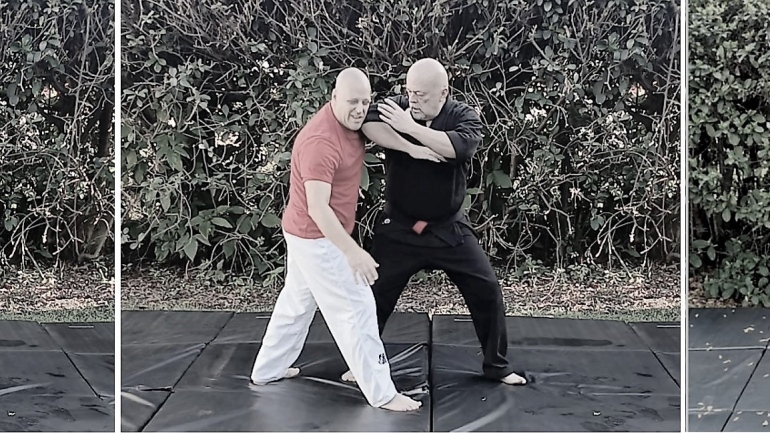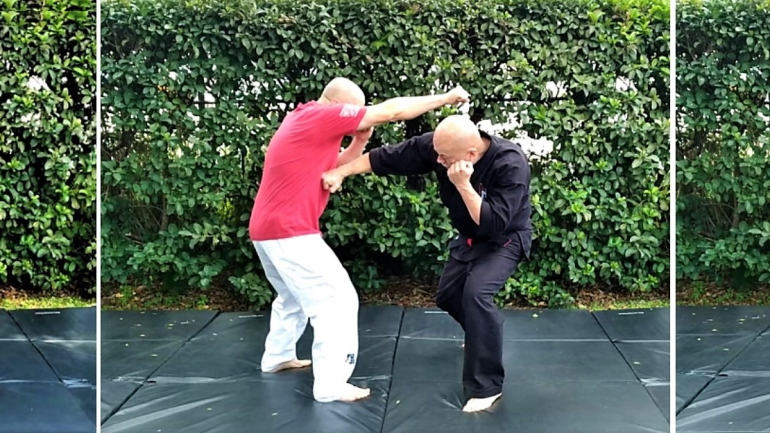
Understanding the Architecture of the U.S. Army’s WWII Close-Combat Course At first glance, the World War II-era Restricted Judo course can look like a collection of harsh hand-to-hand combat techniques assembled for soldiers preparing for war. There are…

CROSS TRAINING VS. CROSS RANKING Martial arts are built on discipline, respect, and legitimacy. While two terms – cross training and cross ranking – may appear similar, they represent opposite approaches to growth and recognition within the martial community. As…
The timing of Kajukenbo strikes is crucial to their effectiveness in real combat, directly influencing whether an attack lands with power, disrupts the opponent’s momentum, or neutralizes a threat decisively. This martial art’s philosophy prioritizes aggressive, preemptive action, teaching practitioners to…
Dynamic Kajukenbo emphasizes the evolution of martial arts, blending traditional systems like Karate, Judo, Kenpo and boxing with modern combatives to create a street-ready, adaptable martial art. This makes it highly relevant for those looking to move beyond…
“Barron Shepherd is a tremendous advocate for all the things that make combative training great! Martial artists travel along a path. Some find the beginning of that path in a dojo and remain for a lifetime. Others…
During WWII, military combatives programs prioritized techniques that were practical, easy to learn, and effective under stress. The reverse hip throw was one of four core throws taught across U.S. military training manuals because of its proven success…
Barron Shepherd’s Combat Judo differs from traditional Judo in several key ways, largely in its focus and application. While both are rooted in the same Japanese martial arts principles, Combat Judo is specifically tailored for real-world combat situations.…
GENERAL OVERVIEW Combat Judo is a specific interpretation and application of judo that emphasizes a strategic integration of traditional judo techniques for self-defense and combat situations, focusing on effective entry and disruption to successfully engage and neutralize…
The time it takes to go from white belt to yellow belt in Kajukenbo depends on many factors, including training time, attitude, skill development and the instructor or school. There are a lot of skills to learn in…